
bLockerman's Minesweeper Guide: Core rules of the board
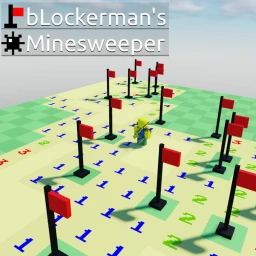
About
OverviewbLockerman's Minesweeper, made by bLockerman666 and aamo_s, is a classic minesweeper puzzle on Roblox where you clear a board of tiles without stepping on a hidden mine. This guide walks you through the rules, how to read the board, strategies for working through tough spots, and what you can do with a private server.
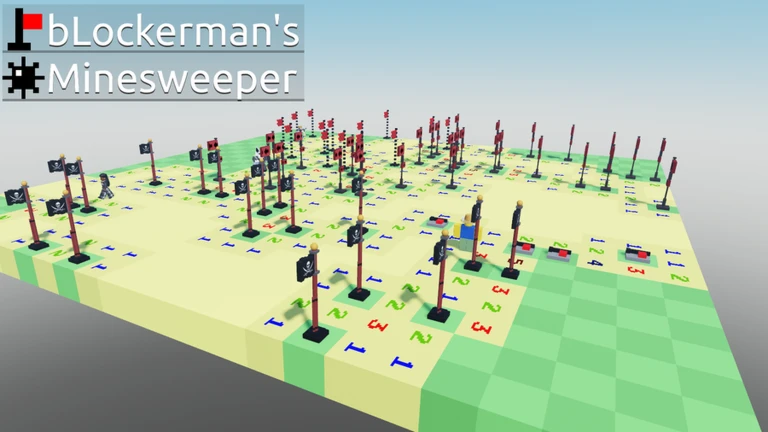
What is on this page
Contents
Core rules of the board
Summary
The board is a grid of tiles with mines hidden randomly underneath. Your only goal is to step on every tile that does not contain a mine. Touch a mine and it is game over. The number printed on a revealed tile tells you exactly how many mines sit in the surrounding 3×3 area — that means up to eight neighbors: left, right, above, below, and all four diagonals.
- Win condition step on all safe tiles
- Lose condition step on any mine
- Number on a tile count of mines in the surrounding 3×3 area
- Flag a marker you place on a tile you suspect holds a mine
- Blank tile a revealed tile with no number, meaning zero mines nearby
Getting started on your first board
Step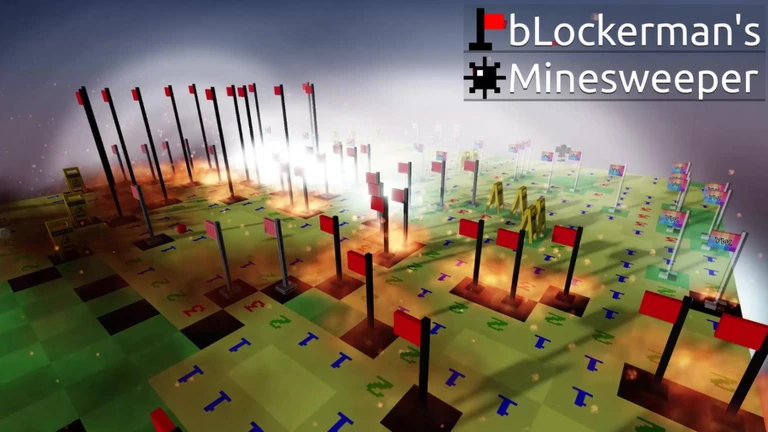
When you load in, you will see the full grid waiting for you. Pick any tile and step on it to get your first numbers. Flags are free to place and free to remove, so use them liberally as a scratch pad while you think.
- Look at the board find a spot that feels open and tap a tile to reveal it.
- Read the number count how many mines the game is telling you are nearby.
- Place a flag left-click a tile you believe holds a mine to mark it.
- Adjust the flag if you change your mind, remove it and try a different tile.
- Skip the tutorial if needed you can skip it temporarily or jump into a private server instead.
Reading the numbers to stay alive
Tips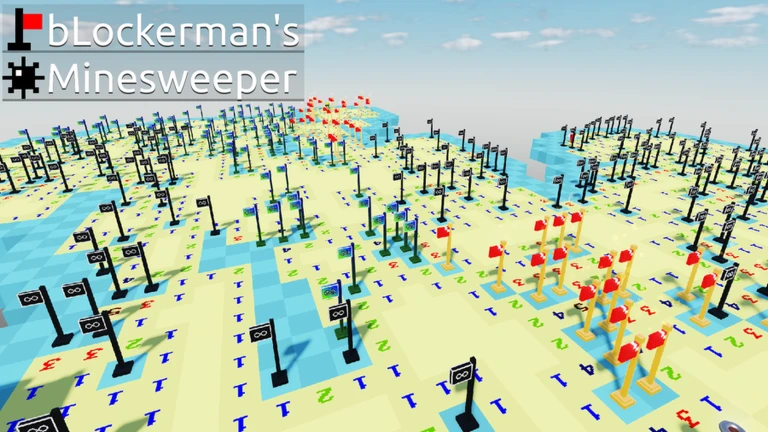
The numbers are your only tool, so knowing how to squeeze information out of them is the difference between finishing a board and hitting a mine. Start from certainty and work outward rather than guessing blind.
- A blank tile (no number) means every one of its eight neighbors is safe — step on all of them.
- Cross-check a number against all of its unrevealed neighbors before deciding anything.
- Work from the lowest numbers first; they leave fewer possibilities to sort through.
Edge and corner tiles — a common mistake
Warn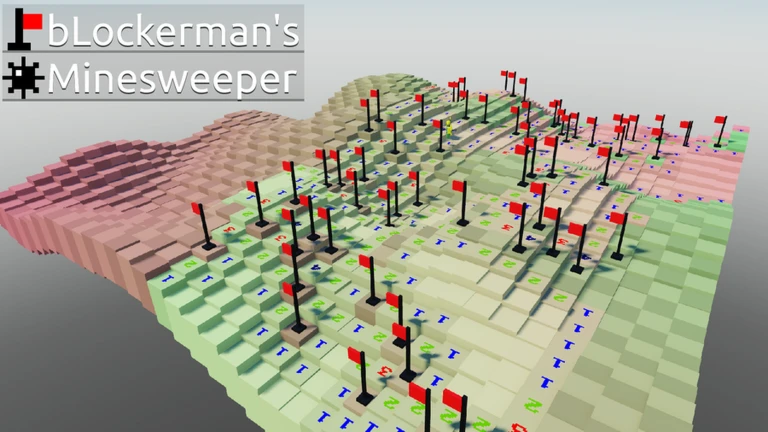
A tile in the middle of the board can have up to eight neighbors. A tile on the edge has at most five, and a tile in a corner has only three. The number on the tile still counts only the mines in those reduced neighbors, which makes small numbers on edge tiles carry more weight than the same number would carry in the center of the board.
When you are stuck — a debugging checklist
CheckIf the board stops making sense, slow down and check your work rather than guessing. A single wrong flag placed early can quietly poison your logic for many moves.
- Recount the neighbors of any tile that looks contradictory diagonal tiles are easy to miss.
- Review every flag you have placed and ask whether the original reasoning still holds.
- Switch to a completely different region of the board and see if fresh numbers there give you new certainty.
Private servers and free play
TableEverything you need to play and finish a full game of minesweeper is free. Private servers let you change the board to suit you, but they come with a catch worth knowing before you spend anything.
| Standard board | free, and wins count toward your record |
| Private server | paid, lets you customize board size and mine density |
| Wins in private servers | do not count |
| Tutorial skip | available to everyone at no cost |
Glossary
Glossary- Tile
- One square on the board — it starts hidden and becomes revealed when you step on it.
- Mine
- A hidden danger on the board; stepping on one ends the game immediately.
- Number hint
- The number shown on a revealed tile, telling you how many mines exist in its surrounding 3×3 area.
- Flag
- A marker you place on a tile you suspect is a mine, used to keep track of your reasoning.
- Blank tile
- A revealed tile that shows no number, confirming there are zero mines among its neighbors.
- Private server
- A paid server where you can customize the board size and mine count, though wins recorded there do not count.
Common questions
FAQWhat happens after I step on a mine?
The game ends and the board resets. A new board with a fresh random mine layout is generated, so every attempt is different.
Why should I bother placing flags if I can just remember where I think the mines are?
Flags give you a visual record across the whole board at once. They also help you avoid accidentally stepping on a tile you had already marked dangerous.
Do I need a private server to enjoy the full game?
No — the standard board gives you the complete minesweeper experience at no cost. Private servers are an optional extra for players who want to tweak the board size or difficulty beyond the default setup.
What does a blank tile with no number mean?
It means none of that tile's neighbors contain a mine. Every tile touching it is safe to step on, making blank tiles one of the most useful starting points for opening up the board.
Game updates can change what is on this page. If you spot something, get in touch and let us know.