
Steal a Brainrot Mutation Multipliers: Traits, Stacking, and Income
Income in Steal a Brainrot depends not only on mutations but also on a character’s original base income and separate traits. Multiplying Gold and Diamond together, or multiplying every trait together, will not give a valid comparison between individual characters.
Using mutation and trait tables and 7 stacking examples, this article explains which characters to keep and how much income a replacement adds. Before choosing a character by its mutation multiplier alone, calculate the displayed income per second.
What kind of game is Steal a Brainrot?
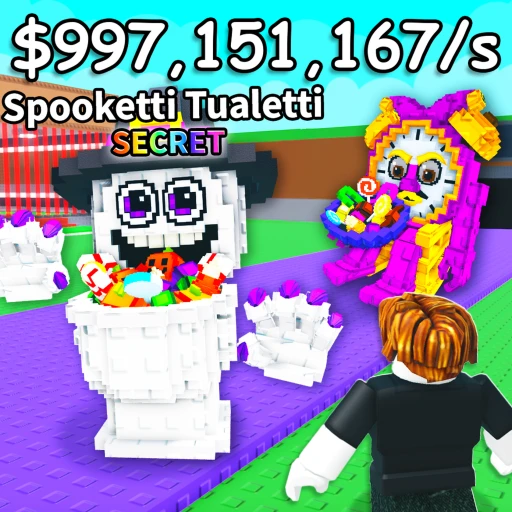
Steal a Brainrot is a Roblox game in which you buy characters or steal them from other players, collect them at your base, and increase your income. When choosing a character, consider its original income and attached traits as well as its mutation multiplier.
How do mutations, traits, and rarity differ?
| Factor | What it represents | Comparison notes |
|---|---|---|
| Rarity | A character’s grade | Not the mutation or trait multiplier itself |
| Mutation | A state such as Gold or Diamond that changes a character’s appearance and income | 1 character can have 1 mutation. Do not multiply mutations together |
| Trait | A separate effect such as Fire or Taco | Multiple traits can be calculated, but distinguish additive bonuses from exceptions |
| Base income modifiers | Player-side conditions such as Rebirth | Do not confuse a character’s calculated income with the amount collected at the base |
Identify effects by name and icon
In Steal a Brainrot, mutations and traits can change income per second even for characters with the same name. Check the attached names and icons together, rather than color alone, to identify the effects present.
A higher-rarity character does not necessarily earn more in every combination. Characters have different original base incomes, so compare their final income per second using the same units.
Main mutation income multipliers and related events
| Icon | Mutation | Comparison multiplier | With base income of $1,000/second | Historical acquisition routes |
|---|---|---|---|---|
 |
Default (normal) | ×1 | $1,000/second | No mutation |
 |
Gold | ×1.25 | $1,250/second | Natural spawns |
 |
Diamond | ×1.5 | $1,500/second | Natural spawns |
 |
Rainbow | ×10 | $10,000/second | Natural spawns; increased opportunities during the Rainbow event |
Compare multipliers at the same base income
The mutation and trait values in this article come from historical information we checked on 2026-10-24. Every table amount is an example with base income of $1,000 per second, excluding traits and base modifiers. These are not current measurements, prices or incomes for particular characters, or a complete up-to-date mutation ranking.
Gold, Diamond, and Rainbow are examples of naturally spawning mutations; other mutations need to be considered with their corresponding events. Choose opportunities from the current event schedule rather than waiting solely because an old description says “every 1 hour”.
Rainbow and Divine both have a multiplier of 10, but their events and possible traits differ. Compare the relevant event and its requirements as well as the multiplier. Source: Noobini Pizzanini/Gallery [1]
Comparing event-related mutations
| Mutation | Comparison multiplier | With base income of $1,000/second | Historical acquisition routes |
|---|---|---|---|
| Divine | ×10 | $10,000/second | Divine event |
| Cyber | ×11 | $11,000/second | Cyber event |
| Phantom | ×12 | $12,000/second | Phantom event |
| Lava | ×6 | $6,000/second | Molten event |
| Galaxy | ×7 | $7,000/second | Galactic event |
| Yin Yang | ×7.5 | $7,500/second | Yin Yang event |
| Radioactive | ×8.5 | $8,500/second | Radioactive event |
| Cursed | ×9 | $9,000/second | Cursed event |
| Candy | ×4 | $4,000/second | Candy Aurora event |
| Bloodrot | ×2 | $2,000/second | Bloodmoon event |
Equal multipliers can have different acquisition conditions
For the same character without traits, you can compare the multipliers directly. For characters with traits, include the additions described next.
Trait additions and the Sleepy exception
| Trait | Addition or exception used in calculation | Historical application conditions |
|---|---|---|
| Fire | +5 | A solar flare hits the character |
| Nyan | +5 | Applied to eligible characters during the Nyan event |
| Taco | +2 | A Taco cannon hits the character |
| Wet | +1.5 | Applied to eligible characters during the rain event |
| Halo | +5 | Eligible Divine characters during the Divine event |
| Sleepy | Apply ×0.5 at the end | Income-reducing effect from the Sleepy event |
Distinguish trait additions from total multipliers
Normal trait values are additions to the mutation multiplier. Normal multiplier 1 plus Fire’s addition of 5 gives a total of 6; Gold’s 1.25 plus an addition of 5 gives a total of 6.25. The “+” in the calculation represents this added amount.
“Addition of 5” and “a normal character with the trait totals 6” describe the same conditions in different ways. Do not add the bonus 5 and the total 6 again as though they were separate traits.
Recognize the Nyan trait icon

Apply Sleepy after the additions
For a character with Sleepy, multiply income by 0.5 after calculating the other additions. Even with a high-multiplier mutation or other traits, apply this final halving separately.
Mutation and trait income: distinguish what gets multiplied
| Combination example | Formula | Character income per second |
|---|---|---|
| No mutation or traits | 1,000×1 | $1,000 |
| Gold only | 1,000×1.25 | $1,250 |
| Gold+Fire | 1,000×(1.25+5) | $6,250 |
| Gold+Fire+Nyan | 1,000×(1.25+5+5) | $11,250 |
| Rainbow only | 1,000×10 | $10,000 |
| Rainbow+Fire | 1,000×(10+5) | $15,000 |
| Rainbow+Fire+Sleepy | 1,000×(10+5)×0.5 | $7,500 |
Add trait bonuses before calculating income
Here, too, base income is a hypothetical $1,000 per second. Using Fire’s addition of 5, Gold+Fire gives 1,000×(1.25+5)=6,250 dollars/second. The coincidentally matching result ‘1,000×1.25×5=6,250’ does not validate that method. In the next example, Gold with Fire and Nyan gives 11,250 with addition versus 31,250 with multiplication, making the difference clear.
Next, Rainbow+Fire gives 1,000×(10+5)=15,000 dollars/second. Including Sleepy gives 15,000×0.5=7,500 dollars/second. If the income display is abbreviated or rounded, distinguish small display differences from differences in the calculation method.
Why can a lower-multiplier character earn more?
| Hypothetical comparison | Base income | Mutation / traits | Calculated income |
|---|---|---|---|
| Character A | $1,000/second | Rainbow | $10,000/second |
| Character B | $10,000/second | Gold | $12,500/second |
| Character C | $1,000/second | Diamond | $1,500/second |
| Character D | $1,000/second | Gold+Fire | $6,250/second |
Compare characters with different base incomes
A multiplier modifies base income. Rainbow with base $1,000/second earns $10,000/second, while Gold with base $10,000/second earns $12,500/second. In this hypothetical example, Gold’s lower multiplier produces higher final income.
Traits matter even when comparing the same character. With base income of $1,000/second, Diamond alone gives $1,500, whereas Gold+Fire gives $6,250. Replacing it with Diamond based only on the mutation would reduce income.
Compare character name, base income, mutation, traits, base modifiers, and whether the player is online. When names or base incomes differ, compare the final income per second as well as the multiplier. Account for differences in Rebirth and base modifiers when using another player’s collected income as a reference.
Buying and replacing characters: calculate payback from the increase
| Situation | What to compare |
|---|---|
| Buying for an empty slot: | Compare simple payback time as purchase cost ÷ the new character’s income per second |
| Replacing a filled slot: | Compare the increase: new income − current income |
| Income stays the same or falls: | For an income-focused replacement, do not rush based on a name or color alone |
| Equal high multipliers but different prices: | Compare purchase cost together with the income increase |
Adding to an empty slot versus replacing a character
Let purchase cost be P and income per second be I. For an empty slot, simple recovery of the purchase cost is P÷I. For example, a $2,000,000 purchase earning $10,000/second pays back in 200 seconds, or 3 minutes 20 seconds. These are hypothetical amounts, not a price list for actual characters.
Calculate replacement payback from the income increase
If you replace a slot currently earning $4,000/second with a character earning $10,000/second, the increase is $6,000/second. 2,000,000÷6,000≒333.3 seconds, or about 5 minutes 33 seconds. When excluding proceeds from selling the current character, recovering the purchase cost from the replacement’s added income takes longer.
Obtaining a character with a high-multiplier mutation and increasing total base income are different goals. In an empty slot, the new character’s income is the full increase; in a filled slot, subtract the removed character’s income. These simple calculations exclude theft, selling midway, waiting for events, sale proceeds, and changes caused by Rebirth.
Practical steps for targeting mutations and traits
| Order | Action | What to check |
|---|---|---|
| 1 | Set your budget before buying: | Compare available funds with displayed income including mutations and traits, not just base income |
| 2 | Identify the relevant event: | Decide whether you want to change the mutation or add a trait |
| 3 | Check the application trigger: | Distinguish conditions such as a hit on the character or a required mutation |
| 4 | Identify the changed character: | Match changes in name, icon, and income per second |
| 5 | Choose a slot after securing it: | For replacements, compare the difference from the current character |
| 6 | Prepare for the next opportunity: | Check existing event schedules rather than waiting solely on historical fixed cycles |
Plan from purchase through securing the character
You can buy characters or steal them from other players and bring them to your base. When choosing a mutated or trait-bearing character, consider purchase, transport, and securing it at your base as one process, rather than income alone.
Distinguish natural spawns and events from the old Rainbow Machine
For natural spawns, distinguish your target character appearing from it appearing with the target mutation. A changed event background does not apply a trait to every character. Match application triggers, such as a flare for Fire or a cannon hit for Taco, with changes in the character’s name and icon.
The Halo example applies to Divine characters. Rainbow and Divine both have multiplier 10, but when targeting Halo, check the required mutation as well as the multiplier.
The old Rainbow Machine, which accepted Gold characters, was unavailable when we checked. Collecting its former input quantity alone does not restart it; distinguish the old procedure from current ways of obtaining characters.
Eligible characters and application locations vary by event. Before leaving valuable characters outside, check that event’s target conditions. Entering a base does not necessarily exclude a character from every possible trait.
Frequently asked questions (FAQ)
Can Gold and Diamond be stacked?
1 character has 1 mutation. Do not calculate Gold and Diamond as simultaneous states. Traits are separate, so distinguish this from combinations such as Gold+Fire.
With 2 traits, do I multiply their multipliers together?
Normal trait additions are added. With base 1,000, Gold 1.25, Fire addition 5, and Nyan addition 5, 1,000×(1.25+5+5)=11,250. Apply exceptions such as Sleepy separately at the end.
Should I choose Rainbow or Divine?
In this comparison, Rainbow and Divine both have multiplier 10. With the same character, traits, and other modifiers, that multiplier alone produces no income difference. Divine is eligible for Halo, so also compare acquisition routes and attached traits.
Does higher rarity or a higher multiplier always beat my current character?
Different base incomes or traits can reverse the result. In the hypothetical example, Rainbow with base 1,000 earns less than Gold with base 10,000. Calculate the final income-per-second difference before replacing a character.
Can I multiply income by an event’s Luck multiplier?
Luck associated with acquisition or spawning is separate from a character’s income multiplier. Do not directly add or multiply the Luck number into a Gold or Fire calculation; compare the applied mutations, traits, and income per second.
Can I still activate the old Rainbow Machine by collecting its required characters?
It was unavailable when we checked. Collecting the former required number of Gold characters does not restart the old Rainbow Machine. Separate ways of obtaining a Rainbow character from the machine’s historical procedure.
After calculating income, prepare defense and Rebirth
After choosing a character to buy, also check free base slots, funds after purchase, and characters lost through Rebirth. Read the guide for overall progression and gear use, and event information for schedules.